By Kennedy Maize
Canadian Prime Minister Mark Carney has responded to Donald Trump’s declared trade war with its northern neighbor with terms Trump can understand: iron, steel, oil, exports, and money.
On Oct. 1 Carney announced the Canadian government will fast track a long-proposed crude oil pipeline from Alberta to British Columbia. Formerly known as the West Coast Oil Pipeline and now renamed the Pacific Link will be designated “a project of national interest.” 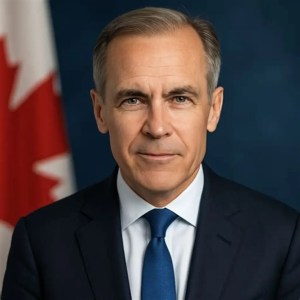
According to Carney, his Major Projects Office, located in Calgary, “supported by the Canada Energy Regulator, will lead consultations with all stakeholders to set the conditions for this project – specifics about the ownership, the benefits, the environmental protections, and the local hiring, contracting, and oversight. The MPO will then work to finalise those conditions by the first of September next year – clearing the way to get shovels in the ground.
“This means that as the project proponents work over the next year to develop their final concept – everything from community consultations to route mapping, ecological surveys, cost estimates, procurement, and workforce planning – they can do so with confidence that the federal government supports this project.”
Carey made the connection to the Trump administration in Washington clear. “A pipeline to the west coast is part of our mission to transform our economy, to double our non-US exports over the next decade,” he said.
The BBC commented, “He argues that Canada’s economic ties to the US have become a vulnerability in light of protectionist tariffs implemented by US President Donald Trump. Last year, Canada sent 90% of its crude oil exports south of the border.”
The pipeline is designed to move a million barrels per day of Alberta’s oilsands heavy crude from Bruderheim, Alberta, 775-miles to a deep-water port near Delta, British Columbia. Pacific Link will be the first project picked for government support under a new program Carney’s Liberal government put in place last year.
With an expected in-service date of 2032 to 2033, the pipeline is expected to cost $35.2 to $43.7 billion. Canada’s Financial Post newspaper cited Curtis White, a vice president at Calgary-based International Petroleum Corp., “who said companies considering new projects four years from now could green-light them in 2028, bringing meaningful volumes of oil into the system two years ahead of schedule.”
Carney’s oil pipeline project will face controversy. Canadian native tribes have expressed concerns, as have some environmentalists concerned about the impact of increased seaborn traffic on marine life, and from U.S. state government interests concerned about the environmental impact off their shores.
When Carney announced the pipeline push, Canada’s indigenous news service APTN reported, “The Union of B.C. Indian Chiefs (UBCIC) is promising to fight against the west coast Pacific Link pipeline designated to be in the ‘national interest’ by Prime Minister Mark Carney today.
“We have a duty and an obligation to protect our rights to the fullest extent of the law and we have every intention of doing that. This is not a cake walk, this is not a ‘gimme’, this will be hard-fought in the court rooms, and if necessary, with boots on the ground,” said UBCIC president Grand Chief Stewart Phillip.”
APTN commented, “Phillip joins a growing chorus of First Nation voices speaking out against Pacific Link.”
Across the border in Olympia, Wash., the day after Carney’s action, Washington Governor Bob Ferguson and Department of Ecology Director Casey Sixkiller issued a statement of concern about the pipeline. They said, “We are disappointed in the decision today by the Government of Canada to list the proposed oil pipeline as a project of national interest. The classification puts the project on a fast track, limiting environmental reviews and the ability to provide input.
“The proposed project would bring a massive expansion in both the volume of crude oil and the number of tankers transiting the Salish Sea. If a project of this scale is going to proceed, it needs to come with a corresponding commitment to also increase our region’s capacity to prevent and respond to a catastrophic spill.” Oil supertankers have been barred from Washington ports since the 1970s, Ferguson and Sixkiller said.
Two days before the pipeline announcement, Carney announced his government would spend $1 billion on “ocean protection to support responsible economic growth, protect marine ecosystems, strengthen marine safety and emergency preparedness, and advance reconciliation with First Nations.”
Carney said $740 million would go to “strengthen ocean conservation,” noting that this is in “expectation of significant projected growth in marine shipping associated with major energy, Liquefied Natural Gas, port, and resource development projects on British Columbia’s coast…”
Science magazine quoted University of British Columbia economist Rashid Sumaila that the new funding is substantial compared with past investments and could make “a significant impact if the resources are used strategically to target priority areas of Canada’s vast marine ecosystems.”